The Story Behind Each 7 Brew Original Drink Name
Disclosure: sevenbrewmenucoffee.com is an independent fan-run reference site with no affiliation with 7 Brew Coffee Inc. The naming analysis in this article is based on observable logic, community sourcing, and publicly available brand information. Where 7 Brew has made official statements about drink origins, this is noted. Where analysis is editorial interpretation, this is stated clearly.
7 Brew’s drink naming approach is worth understanding because the names do functional work – they tell you what the drink will taste like before you see the ingredient list, and they position each Original within a flavor identity framework that makes the menu navigable even for first-time visitors. Starbucks names drinks for sizes and preparation methods. Dutch Bros names many drinks after slang and culture. 7 Brew’s Original names describe sensory experiences – and that is a specific, intentional choice with meaningful implications for how you use the name to decide what to order.
7 Brew’s Naming Philosophy: Experience Over Ingredient
The most important thing to understand about 7 Brew’s Original names is that they name the flavor experience, not the literal ingredient. The Cinnamon Roll is not named because it contains a cinnamon roll – it is named because it tastes like one. The Cookie Butter is not named because it contains cookie butter butter as a literal food – it is named because the flavor profile evokes the experience of eating a spiced cookie spread on something warm. The Blondie evokes the warm, caramel-gold character of the dessert bar, not because the drink contains the dessert.
This is a specific and useful naming strategy for a drive-thru menu. At 7 Brew, you are ordering from a speaker without seeing the drink. A name like “Caramel Vanilla Half-and-Half Breve” is accurate but unusable in a social context. A name like “Blondie” is memorable, communicates the flavor orientation, and gives customers a shorthand to discuss their order with friends. The names are designed to travel – to be said aloud in a car, shared on social media, and identified by someone who has never visited 7 Brew before.
No competitor site has examined this naming logic, which means most customers discover the connection between name and flavor by accident rather than understanding it as a system. This article documents that system for the full Original lineup.
The Naming Reference Table
| Drink Name | What the Name References | Naming Type | Does the Name Predict the Flavor? |
|---|---|---|---|
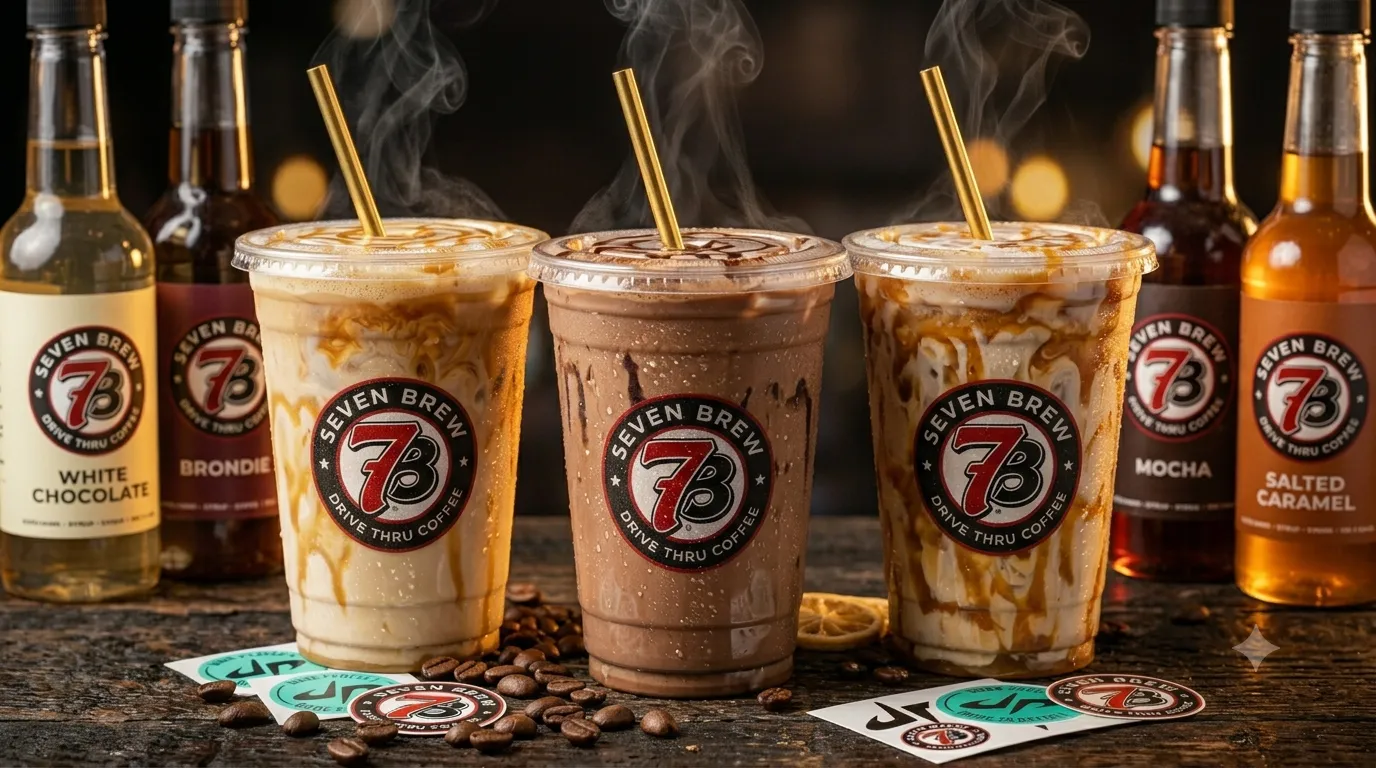
| Blondie | Blondie dessert bar – caramel-gold, warm, buttery | Visual + flavor analog | Yes – caramel and vanilla warmth |
| Brunette | Darker counterpart to Blondie; deep chocolate color | Visual contrast / pair naming | Yes – dark chocolate depth |
| Sweet and Salty | Explicit flavor description – sweet-savory contrast | Literal sensory description | Yes – salted caramel contrast |
| Cinnamon Roll | Bakery reference – spiced roll with icing sweetness | Food experience analog | Yes – warm cinnamon spice with sweet finish |
| Cookie Butter | Cookie butter spread – Biscoff-style spiced cookie sweetness | Ingredient experience analog | Yes – intensely sweet, spiced cookie profile |
The Blondie: Named for a Dessert, Not a Hair Color
The Blondie’s name references the blondie dessert bar – a close cousin to the brownie that uses caramel and vanilla as its primary flavor components rather than chocolate. A blondie bar is dense, buttery, golden-colored, and sweet in a warm, caramel-vanilla way that distinguishes it from both brownies and standard cookies. The name communicates all of this before the first sip: you are getting something caramel-golden, warm-flavored, and sweet in the specific way that the color “blonde” implies – lighter, warmer, less intense than the darker alternative.
The choice to name the drink after a dessert bar rather than after its specific ingredients – “caramel vanilla breve” – is deliberate. The dessert reference creates an immediate sensory memory for anyone who has ever eaten a blondie bar, and it positions the drink as an indulgent, dessert-quality experience rather than a flavored coffee drink. This framing matters because it sets expectations correctly: a Blondie at 7 Brew is not a light coffee with a hint of caramel. It is a half-and-half breve where caramel sauce and vanilla syrup are primary flavor contributors, closer in spirit to a dessert drink than a morning coffee.
The Blondie name also functions as part of a paired naming system with the Brunette – the two drinks together establish a visual and flavor spectrum that makes the brand feel like a coherent identity rather than a list of flavors. You are a Blondie person or a Brunette person in the same way you might identify with other cultural pairings – the naming invites self-identification rather than just drink selection. This is the most sophisticated piece of 7 Brew’s naming strategy and it is largely responsible for the Blondie’s cultural penetration in the brand’s markets.
The Brunette: The Pair-Name That Does the Most Work
The Brunette is the most interesting name in the Original lineup because it does not reference a dessert or an ingredient – it references a color contrast with the Blondie. Brunette means dark-haired or dark in general contrast to blonde. The naming is explicitly positional: the Brunette exists in relation to the Blondie, is darker in both color and flavor, and its name communicates this relationship before you know anything else about either drink.
This is a pair-naming strategy – two drinks whose identities are defined in relation to each other rather than in isolation. The Blondie could stand alone as a named drink without the Brunette, but the Brunette is more powerful as a name because of its explicit contrast with the Blondie. A customer who hears both names simultaneously understands immediately that they represent different ends of a spectrum. A customer who discovers the Brunette first and then learns about the Blondie immediately understands the relationship. The names create a navigable pair even for someone who has never tasted either drink.
The dark chocolate sauce in the Brunette makes the name accurate visually as well. A Brunette breve is visibly darker than a Blondie breve, and the chocolate’s depth of flavor maps onto the name’s connotations – deeper, more complex, less immediately bright. The naming earns its accuracy in both visual and flavor terms, which is rarer than it might seem in the beverage industry where many drink names are purely aesthetic.
The Sweet and Salty: The Most Transparent Name on the Menu
The Sweet and Salty is the most literally descriptive name in the Original lineup – it tells you exactly what the drink’s flavor experience is before you order it. Sweet and salty contrast is a well-established flavor principle: salt reduces bitterness perception, amplifies sweetness slightly, and creates a more complex and interesting flavor experience than sweetness alone. The name captures all of this in three words.
What the name does not fully communicate is that the Sweet and Salty is built on a caramel base – it is a salted caramel breve by ingredient, but “Sweet and Salty” is the name 7 Brew chose over “Salted Caramel.” This choice is significant. “Salted Caramel” describes the ingredients. “Sweet and Salty” describes the experience. 7 Brew opted for the experience descriptor, consistent with the broader naming philosophy across the Originals lineup.
One important correction for customers who encounter this drink for the first time: the Sweet and Salty is not a caramel drink with salt sprinkled on top as a garnish. The salt is integrated into the flavor construction – it is part of how the drink is built, not an afterthought. Ordering a regular caramel drink and requesting a salted rim produces a different result. The Sweet and Salty secret menu has community builds that extend this savory-sweet concept further if you want to explore variations.
The Cinnamon Roll: Bakery Memory as a Naming Strategy
The Cinnamon Roll uses a specific bakery reference rather than a general flavor description. The name does not say “cinnamon spice” or “cinnamon sweet” – it says Cinnamon Roll, which invokes the full sensory memory of a bakery cinnamon roll: warm dough, spiced cinnamon filling, sweet icing, and the buttery warmth that the half-and-half base replicates in a drink context.
This kind of naming works because cinnamon roll as a flavor concept is widely shared. Almost every customer who encounters this name has a specific sensory memory associated with it, and the drink’s flavor construction is designed to activate that memory. The cinnamon-forward spice character, the sweet finish, and the creamy half-and-half base all map onto what a cinnamon roll tastes like when the icing has just melted into the warm roll – sweet, spiced, creamy, and warm.
The name also signals that this is a bakery-category drink rather than a fruit, chocolate, or caramel drink – it immediately places itself in the spice-bakery flavor family, which tells a customer oriented toward chai lattes or spiced seasonal drinks that this is their lane. The Cinnamon Roll secret menu builds on this bakery flavor platform with community-created variations that add elements like cream cheese syrup or caramel to push the baked-good analogy further.
The Cookie Butter: An Ingredient Name That Functions as an Experience Name
Cookie butter as a food product is most commonly associated with Lotus Biscoff spread – a spiced European cookie ground into a butter-like paste that has become a widely recognized flavor in the food industry over the last decade. The name “Cookie Butter” references this product rather than describing the flavor abstractly, which means its effectiveness as a drink name depends on how familiar the customer is with cookie butter as a food concept.
For customers who know cookie butter – from Trader Joe’s, from airline snacks, from Biscoff cookies – the name immediately communicates a very specific flavor: warm spiced caramel-adjacent sweetness with a cookie-dough depth and a smooth, creamy finish. For customers who have never encountered cookie butter, the name reads as less informative than the other Originals names, which is one reason the Cookie Butter likely has lower trial volume than the Blondie or Brunette among first-time customers.
The naming strategy here reflects 7 Brew’s confidence that enough of its customer base knows cookie butter as a flavor concept to make the name work – and that those who do know it will immediately want to try the drink version. This is a narrower audience signal than the Blondie or Cinnamon Roll, which reference more universal flavor memories. It positions the Cookie Butter as a more insider-knowledge order, which may actually serve the brand well by giving regular customers a drink to recommend to others as something they should discover.
How the Naming Logic Extends to Non-Original Drinks
The experience-naming pattern extends well beyond the Seven Originals. The Honeybun Breve references the classic honey bun pastry – sweet, glazed, honey-forward. The Frosted Cookie Breve references a frosted sugar cookie – sweet, vanilla-iced, bakery-adjacent. The Toasted Marshmallow Latte references a specific roasted-sweet flavor memory that any customer who has ever toasted a marshmallow will recognize immediately.
The pattern is consistent: 7 Brew names drinks after the food or flavor experience they approximate, not after their ingredients. This makes the menu more navigable for new customers (names are intuitive) and more memorable for regulars (the name attaches to a sensory memory that the drink reinforces). It also creates a stronger emotional connection between the customer and the drink than an ingredient-list name could – you do not feel loyal to “caramel vanilla half-and-half breve” but you can absolutely feel loyal to the Blondie.
The energy drink category uses a different naming convention – the Tropic Thunder, the Midnight Rain, the Ocean Breeze – which uses evocative imagery and atmosphere names rather than food experience analogs. This reflects the different function of the energy drink category: these names evoke mood and setting rather than flavor memory, appropriate for drinks consumed for energy orientation rather than flavor nostalgia.
Popular Modifications and How Names Can Guide Customization
Understanding the naming logic makes customization more intuitive. If the Cinnamon Roll is named because it approximates a cinnamon roll, then adding a caramel sauce to it pushes it toward a caramel-glazed cinnamon roll – a build that intensifies the bakery-dessert character by adding the caramel element of the Blondie alongside the spice element of the Cinnamon Roll. This kind of logic-informed customization is more reliable than random syrup addition.
- Blondie + cinnamon syrup: Moves toward a caramel cinnamon roll character by adding the Cinnamon Roll’s spice element to the Blondie’s caramel-vanilla base
- Brunette + caramel sauce: Moves toward a chocolate-caramel brownie character by adding the Blondie’s caramel element to the Brunette’s chocolate base
- Sweet and Salty + extra salt: Intensifies the defining sweet-salty contrast of the name, pushing further into the savory dimension
- Cookie Butter + white chocolate sauce: Adds a cream-and-cookie character that deepens the dessert-bakery experience the name describes
The 7 Brew Flavor Finder Chrome extension can help you track combinations you have tried and compare them across visits.
Which Name Fits You: Customer Self-Identification by Naming Logic
If you like the flavor memory a name invokes – if “cinnamon roll” makes you want something immediately – that drink is designed for you. The name-to-experience connection is intentional and reliable across the Originals lineup.
If you are drawn to the Blondie name because you liked blondie bars or enjoy caramel-vanilla dessert profiles, the drink will match your expectation. The naming earns its accuracy for this drink more reliably than any other in the lineup.
If you are drawn to the Brunette name without knowing the drink’s relationship to the Blondie, be aware that you are ordering a chocolate breve, not a dark-coffee drink. The name signals “darker than the Blondie” rather than “coffee-forward.”
If the Cookie Butter name is unfamiliar to you, the closest sensory analog is a Biscoff cookie – the small spiced cookies served on European airlines and widely available in supermarkets. If you have eaten a Biscoff cookie and liked it, the Cookie Butter breve will likely appeal to you. If you have not, it is worth ordering a small before committing to a medium.
- Assuming the Brunette is a dark roast coffee drink: The name “Brunette” references the drink’s color and its contrast with the Blondie, not its coffee character. The Brunette is a sweet dark-chocolate breve – espresso is present but it is not the defining flavor. Customers who order a Brunette expecting a dark-roast coffee experience will find a dessert-oriented chocolate drink instead.
- Treating the Sweet and Salty as a modification of a standard caramel drink: The Sweet and Salty is a named Original with a specific construction. It is not a caramel breve with salt added on top. Attempting to recreate it by modifying a different caramel drink may produce a similar but not identical result.
- Assuming the Cookie Butter drink contains literal cookie butter as a food ingredient: The Cookie Butter is named for the flavor experience it approximates, not because it blends Biscoff spread into the drink. The flavoring comes from a cookie butter-flavored syrup. The drink evokes the experience without literally containing the food product.
- Using the naming logic to predict drinks outside the Original lineup: The Originals follow the experience-naming convention reliably. Not every 7 Brew drink name works the same way – energy drink names like Tropic Thunder and Midnight Rain use atmospheric imagery rather than food experience analogs, and predicting their flavor from the name alone is less reliable.
Similar Drinks and How Their Names Map to the Originals
Several non-Original drinks use the same naming logic and can be understood through the same framework. The Snickerdoodle Mocha references a snickerdoodle cookie – a cinnamon-sugar rolled cookie with a characteristic crinkle texture – and applies that flavor profile to the mocha base rather than the breve base. The name tells you it is in the same cinnamon-spice bakery family as the Cinnamon Roll but built on chocolate and milk rather than caramel and half-and-half.
The Banana Bread Mocha references banana bread’s warm, dense, slightly caramelized sweetness and applies it to the mocha construction. The name tells you this is in the warm-baked-goods family – sweet, brown-sugar forward, with a fruit character that is baked rather than fresh. Understanding the naming logic makes the flavor prediction for non-Original drinks like this more reliable.
The Creme Brulee Latte references the specific experience of the caramelized sugar crust on a creme brulee – sweet, slightly bitter from the caramel char, and cream-rich. This is a more sophisticated reference than “caramel latte” and tells an experienced customer that the flavor has a more complex sweetness than a simple caramel syrup would produce.
Related Articles
- 7 Brew Blondie Guide – full flavor breakdown of the original caramel-vanilla breve
- 7 Brew Brunette Guide – what the dark counterpart to the Blondie actually tastes like
- 7 Brew Sweet and Salty – why this is the most accurately named Original on the menu
- 7 Brew Secret Menu 2026 – community builds that extend each Original’s flavor platform
- 7 Brew Calorie and Price Calculator – model the nutritional impact of any Original or customization
Frequently Asked Questions
Why is the 7 Brew Blondie called a Blondie?
The Blondie is named after the blondie dessert bar – a brownie-adjacent baked good that uses caramel and vanilla rather than chocolate as its primary flavor. The name communicates the drink’s warm, golden, caramel-vanilla character and positions it visually and in flavor terms as a lighter counterpart to the Brunette. It is not named for the hair color directly, though the color association is present as a secondary layer.
Why is the 7 Brew Brunette called a Brunette?
The Brunette is named as the darker counterpart to the Blondie using the visual contrast between light (blonde) and dark (brunette). It is a pair-naming strategy designed so that the two names communicate their relationship to each other immediately. The Brunette’s dark chocolate sauce makes the name visually accurate – the drink is darker in color and deeper in flavor than the Blondie.
Does the Cookie Butter drink actually contain cookie butter?
The Cookie Butter breve is named for the flavor experience it replicates – the warm, spiced, sweet character of Biscoff-style cookie butter spread – rather than because it literally blends cookie butter into the drink. The flavoring comes from a cookie butter-flavored syrup. The drink approximates the experience of the food without literally containing it.
Why does 7 Brew use food names for its drinks instead of invented names?
The experience-naming approach – naming drinks after the food or flavor they approximate rather than inventing brand names – serves several functions. It makes the menu more navigable for new customers (names are intuitive), creates stronger sensory memory connections, and generates the kind of shareable vocabulary that works in social settings and on social media. “I got a Blondie” communicates more to another customer than “I got a Caramel Vanilla Breve No. 2.”
Are all the Seven Originals breve drinks?
Yes – the core Seven Originals are all built on the breve construction, meaning espresso shots in half-and-half rather than milk. The half-and-half base is the constant across all Originals; the sauces and syrups named in each drink’s title are the variables. If you want an Original in a lighter format, you can request any of them made with whole milk or oat milk, but the standard build is half-and-half.
Final Recommendation
The naming logic behind 7 Brew’s Originals is a useful ordering tool once you understand it. If a name invokes a food memory you enjoy, the drink is designed to activate that memory. If the name references something unfamiliar – as Cookie Butter might for some customers – the nearest known analog (in that case, a Biscoff cookie) gives you a reliable flavor expectation.
Use the names as predictions. The Cinnamon Roll will taste like a cinnamon roll in breve form. The Sweet and Salty will taste exactly as the name describes. The Blondie will taste like a caramel-vanilla dessert drink. The Brunette will taste like a rich chocolate breve. The Cookie Butter will taste like a sweet spiced cookie spread. When a name at 7 Brew is this consistent with the experience it promises, ordering becomes less of a gamble and more of a conversation with the menu.
sevenbrewmenucoffee.com is an independent fan site not affiliated with 7 Brew Coffee Inc.