7 Brew Drinks Safe During Pregnancy (Caffeine-Free Picks)
This site is an independent, fan-run reference for 7 Brew Coffee and is not affiliated with 7 Brew Coffee Inc. This article is not medical advice. Caffeine figures below are estimates, not official 7 Brew published data, and every pregnant customer should confirm their own personal caffeine limit with their OB-GYN or midwife rather than relying solely on this guide.
This is one of the highest-stakes questions a pregnant 7 Brew customer can ask, and it deserves a precise answer, not a vague reassurance. The rest of this guide ranks 7 Brew’s drinks from zero caffeine to highest, cites the exact ACOG guideline this article is built around, and flags the specific ordering mistakes that lead pregnant customers to underestimate their actual caffeine intake.
A methodology note before the numbers: 7 Brew has not published a comprehensive official caffeine chart, so the milligram estimates throughout this article are drawn from standard espresso caffeine benchmarks and publicly reported shot counts and energy base levels, not from a confirmed company document. Where genuine uncertainty exists, this guide presents the more conservative, higher estimate rather than the lower one, consistent with how a pregnancy-safety resource should handle uncertain figures.
The ACOG Guideline This Guide Is Built Around
According to ACOG’s own published guidance, pregnant women should limit caffeine intake to less than 200mg per day, an amount roughly equivalent to one 12-ounce cup of coffee. This is not this site’s own recommendation – it is ACOG’s clinical guidance, based on research showing that moderate caffeine consumption under this threshold does not appear to be a major factor in miscarriage or preterm birth risk, while the evidence above that threshold is less clear.
It is worth being precise about what the research does and does not show. ACOG’s committee opinion on this topic describes moderate caffeine consumption, defined as less than 200mg per day, as not appearing to be a major contributing factor in miscarriage or preterm birth, while noting that a final conclusion on higher intake levels cannot yet be made with full confidence. Some individual studies have found associations between higher caffeine intake and increased miscarriage risk, though causation is difficult to establish given how these studies are typically designed. The 200mg threshold reflects a precautionary clinical guideline built from the available evidence, not a hard biological cutoff where risk suddenly appears.
One detail worth knowing that most casual pregnancy-and-caffeine content leaves out: caffeine metabolism slows significantly as pregnancy progresses. Caffeine’s half-life is roughly 4-5 hours in a non-pregnant adult, but research indicates it can extend to as long as 15 hours by late pregnancy. This means the same 200mg of caffeine stays active in your system considerably longer in the third trimester than it would earlier in pregnancy or before pregnancy, which is a meaningful reason to be more conservative as pregnancy progresses rather than assuming your first-trimester tolerance still applies later on.
7 Brew Drinks Ranked From Zero to Highest Caffeine
The table below organizes 7 Brew’s menu specifically for pregnancy-safe decision-making, from confirmed zero-caffeine categories to the highest-caffeine options that should generally be avoided or shared across the day rather than consumed in one sitting.
| Category | Estimated Caffeine | Pregnancy Guidance |
|---|---|---|
| Lemonades, smoothies, 7 Fizz sodas | 0mg | Safest choice, no caffeine budgeting needed |
| Unsweetened tea (black, green, herbal) | 0-50mg depending on type | Herbal is 0mg; black and green tea carry some caffeine, confirm type before ordering |
| Decaf espresso, single shot | ~2-15mg | Low but not zero; fits easily within daily budget |
| Matcha Latte | ~65-70mg | Uses roughly a third of the daily budget in one drink |
| Small 7 Energy | ~76-100mg | Uses roughly half the daily budget; not caffeine-free despite the name |
| Single-shot Latte, Breve, or Mocha | ~65-75mg | Fits within budget alone; leaves room for one more low-caffeine source that day |
| Two-shot Breve or Mocha | ~130-150mg | Uses most of the daily budget in one drink |
| Large 7 Energy | ~150-220mg | At or above the full daily limit alone; not recommended |
| Large House Blend or Cold Brew | ~250-300mg | Exceeds the full daily limit in one cup; not recommended |
| Triple 7 (6 espresso shots) | ~380-450mg | Roughly double the full daily limit; avoid entirely during pregnancy |
A single-shot latte, breve, or mocha is the sweet spot for most pregnant customers who want an espresso-style drink: it delivers real coffee flavor at roughly a third of the daily ACOG budget, leaving room for a small additional caffeine source like chocolate or tea later in the day if desired.
Nutrition Snapshot
Beyond caffeine, pregnancy also involves general nutritional considerations that overlap with, but are distinct from, the caffeine question this guide focuses on. 7 Brew’s calorie and sugar range is wide – a black decaf or unsweetened tea runs close to zero calories, while a fully-dressed signature drink can run several hundred calories with a substantial sugar load. Pregnancy itself does not require avoiding sugar or calories from an occasional treat, but a consistently high-sugar daily habit is worth discussing with your OB-GYN, particularly if you are being monitored for gestational diabetes risk.
Calories and Sugar Content During Pregnancy
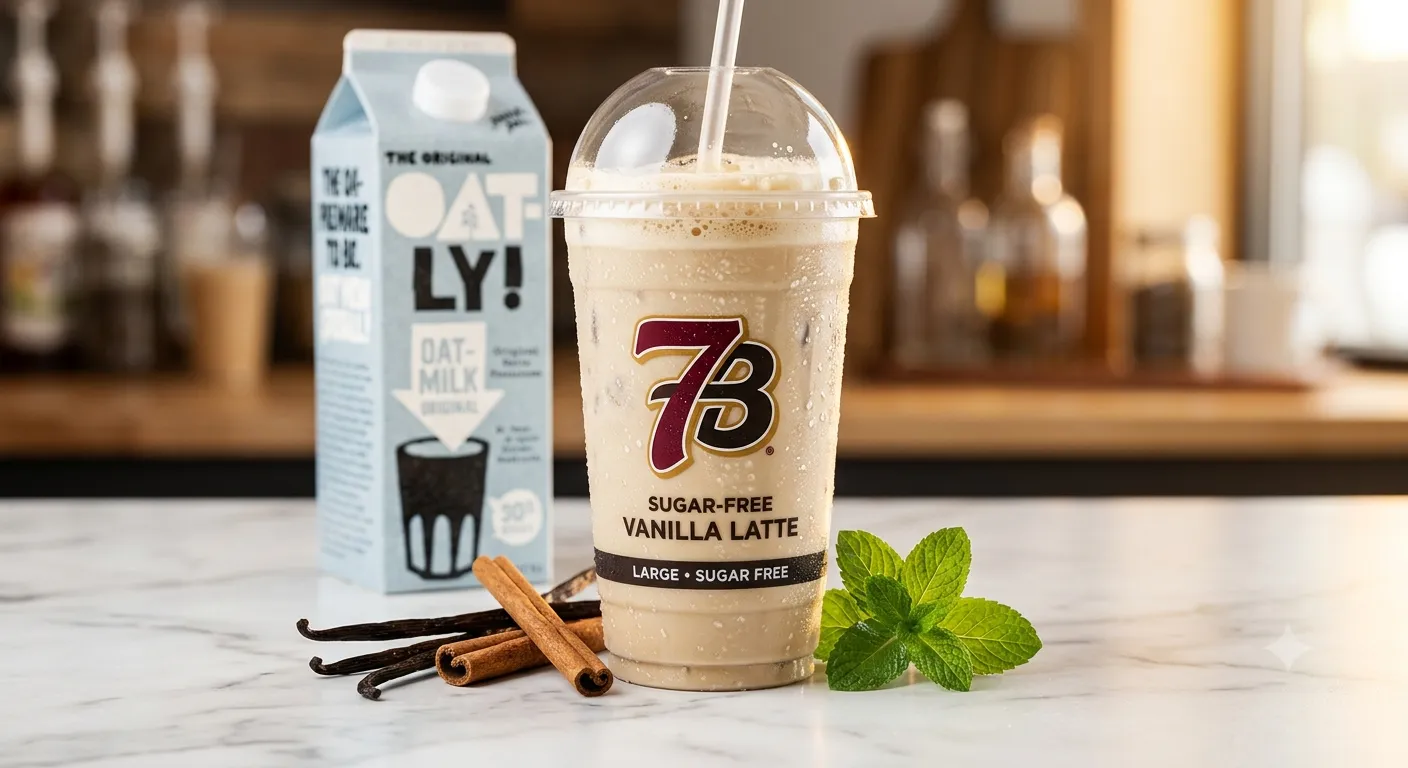
If you are managing gestational diabetes or have been advised to watch blood sugar during pregnancy, sugar-free syrups are available on most 7 Brew builds and can bring a flavored drink’s sugar content close to zero without needing to switch to a fully unflavored option. Combining a decaf or low-caffeine base with a sugar-free syrup and almond or oat milk gives you a genuinely low-calorie, low-sugar, low-caffeine drink that still tastes like a treat.
Interestingly, some research has found a more complex relationship between moderate caffeine and gestational diabetes risk than many pregnant customers assume. A 2021 study from Penn Medicine and the National Institutes of Health, published in JAMA Network Open, found that low-to-moderate caffeine intake was not associated with increased gestational diabetes, preeclampsia, or hypertension risk, and that caffeine intake up to roughly 100mg per day in the second trimester was actually associated with a lower gestational diabetes risk in that study population. This does not change the ACOG 200mg guideline, which remains the standard clinical recommendation, but it is a useful data point for any pregnant customer whose primary worry has been that any caffeine at all poses a risk – the more nuanced research picture supports staying within established guidelines rather than eliminating caffeine entirely out of excess caution.
Allergens: A Brief Note
Pregnancy does not change 7 Brew’s general allergen profile, but some pregnant customers develop new sensitivities or are managing existing allergies more cautiously during pregnancy. Dairy is the most common allergen at 7 Brew, present by default in lattes and breves, with oat, almond, and coconut milk available as substitutions. For a full breakdown, see this site’s dedicated allergen guide, which covers dairy, soy, tree nut, and gluten considerations in more depth than this pregnancy-focused article does.
Some pregnant customers also experience new or heightened dairy sensitivity, acid reflux, or heartburn during pregnancy, independent of any diagnosed allergy. If a standard latte or breve is causing digestive discomfort, switching to almond or oat milk, or trying a lower-acid option like cold brew instead of hot espresso, are both reasonable adjustments to discuss with your OB-GYN if the discomfort persists.
A Note on Morning Sickness and Coffee Aversion
Many pregnant customers experience a temporary aversion to coffee’s smell or taste during the first trimester, even if they enjoyed it regularly before pregnancy. This is a common and normal pregnancy symptom, not a sign that something is wrong, and it typically resolves by the second trimester for most people. If coffee flavor itself is unappealing right now, the zero-caffeine lemonade, smoothie, and 7 Fizz options covered in this guide are a good way to still enjoy a 7 Brew visit without needing to tolerate a flavor your body is currently rejecting.
Customization Options for a Pregnancy-Conscious Order
- Request decaf espresso: Available in most latte, breve, and mocha builds, bringing caffeine down to an estimated 2-15mg per shot rather than the standard 65-75mg.
- Ask for a single shot instead of a double: If you want some caffeine but not a full dose, requesting one shot instead of the standard count roughly halves the caffeine content of a latte or breve.
- Confirm your tea is caffeine-free if that is your goal: Herbal teas are caffeine-free, but standard black and green teas are not – specify which you want.
- Avoid ordering 7 Energy drinks assuming they are caffeine-free: The name suggests an energy or soda product, but every 7 Energy build contains real caffeine from the base itself.
- Pair a sugar-free syrup with a decaf or low-caffeine base if you are also managing sugar intake during pregnancy, for a drink that addresses both concerns at once.
- Ask about milk substitutions if lactose or dairy feels harder to digest during pregnancy: Oat, almond, or coconut milk can ease digestive discomfort some customers notice with standard dairy while pregnant.
- Consider iced over hot if heartburn is an issue: Some pregnant customers find cold drinks like Cold Brew or iced tea easier on reflux symptoms than hot espresso drinks, though this varies by individual.
Who This Guidance Is Suitable For
- Pregnant customers who have been cleared by their OB-GYN or midwife to consume moderate caffeine and want to know specifically which 7 Brew drinks fit within the ACOG 200mg guideline.
- Customers who want a genuine espresso-style treat during pregnancy rather than avoiding coffee shops entirely, and are looking for the specific ordering language to keep that treat within a safe range.
- Partners, friends, or family members ordering on behalf of a pregnant customer who want to double-check a drink choice before it is ordered.
- Customers in earlier trimesters whose caffeine tolerance and metabolism has not yet slowed as significantly as it will later in pregnancy, provided they stay within the general daily guideline regardless of trimester.
Who Should Avoid Certain 7 Brew Drinks
- Anyone whose doctor has specifically advised zero or near-zero caffeine during their pregnancy, for reasons beyond the general ACOG guideline – individual medical circumstances can call for a stricter limit than the general population recommendation.
- Customers in their third trimester who were comfortable with a certain caffeine level earlier in pregnancy, given how significantly caffeine metabolism slows as pregnancy progresses.
- Anyone already consuming caffeine from other sources that day – chocolate, tea, soda, certain medications – who should subtract that from their remaining 200mg budget before ordering a 7 Brew drink.
- Customers considering a Triple 7 or large Cold Brew during pregnancy – both estimated well above the full daily ACOG limit in a single serving.
- Anyone experiencing pregnancy symptoms that caffeine tends to worsen, such as heartburn, acid reflux, or difficulty sleeping, for whom reducing caffeine below even the ACOG limit may improve day-to-day comfort regardless of the miscarriage-risk research specifically.
Alternatives and Related Guides
For the complete list of confirmed zero-caffeine options beyond what is covered here, see this site’s dedicated caffeine-free non-coffee drinks guide. If you are also managing sugar intake during pregnancy, the sugar-free non-coffee guide covers additional lower-sugar options outside the espresso category. For a full breakdown of caffeine content across every drink category, including the highest-caffeine options to avoid, see this site’s caffeine content ranking.
Frequently Asked Questions
Can I drink 7 Brew coffee while pregnant?
Yes, in moderation. A single-shot decaf or regular latte, breve, or mocha generally fits within the ACOG-recommended 200mg daily caffeine limit for pregnancy. Larger, multi-shot drinks like the Triple 7 or a large Cold Brew exceed that limit in one serving and should be avoided.
What is the safest 7 Brew drink during pregnancy?
Lemonades, smoothies, 7 Fizz sodas, and herbal tea are confirmed zero-caffeine choices with no daily budget to track. If you want something warm or espresso-style, a single-shot decaf latte or breve is the lowest-caffeine option that still delivers coffee flavor.
Is the 7 Energy drink safe during pregnancy?
In small amounts, it can fit within the daily caffeine budget, but it is not a caffeine-free choice despite the branding. A small 7 Energy is estimated at 76-100mg of caffeine, using roughly half of the full ACOG daily limit in one drink.
Does decaf coffee have zero caffeine?
No. Decaf espresso retains a residual caffeine content, typically estimated at 2-15mg per shot. This is a meaningful reduction from a regular shot but is not zero, which matters if you are trying to stay at true zero caffeine rather than simply low caffeine.
Does the caffeine limit change as pregnancy progresses?
The ACOG guideline of under 200mg per day does not change by trimester, but caffeine metabolism slows considerably as pregnancy progresses, with caffeine’s half-life extending from roughly 4-5 hours to as long as 15 hours by late pregnancy. This means the same amount of caffeine stays active in your system longer in the third trimester, which is worth discussing with your OB-GYN if you are considering your usual caffeine intake later in pregnancy.
Should I ask my doctor before ordering caffeinated drinks during pregnancy?
Yes. This guide reflects the general ACOG population guideline, but individual pregnancies can carry specific risk factors that call for a stricter personal limit. Your OB-GYN or midwife is the right source for guidance specific to your own pregnancy, and this article should be treated as a starting point for that conversation, not a substitute for it.
Does caffeine during pregnancy increase gestational diabetes risk?
Research published in JAMA Network Open by researchers at Penn Medicine and the National Institutes of Health found that low-to-moderate caffeine consumption was not associated with increased gestational diabetes risk, and that intake up to roughly 100mg daily in the second trimester was associated with lower risk in that study. This is a single study rather than a change to official guidance, so it should not be read as license to exceed the ACOG 200mg limit, but it does suggest moderate caffeine within that limit is not itself a diabetes risk factor.
What if I do not know how much caffeine I have already had today?
When in doubt, choose a confirmed zero-caffeine option like a lemonade, smoothie, 7 Fizz soda, or herbal tea rather than guessing. If you want to keep a running estimate, tracking your caffeine sources through the day, including chocolate, tea, and any medications, makes it easier to know how much budget remains before ordering an espresso-based drink later in the day.
Bottom Line
7 Brew offers genuinely safe options for pregnant customers at every caffeine level, from the confirmed zero-caffeine lemonades, smoothies, and 7 Fizz sodas, to a single-shot decaf or regular espresso drink that fits comfortably within the ACOG-recommended 200mg daily limit. The drinks to actively avoid are the highest-caffeine options – the Triple 7, large Cold Brew, and large House Blend – which estimate well above the full daily limit in a single serving.
The figures in this guide are estimates, not 7 Brew’s own published caffeine data, since the company has not released a comprehensive official caffeine chart. Use this guide as a starting point for an informed order, and confirm your own personal caffeine limit with your OB-GYN or midwife, since individual pregnancies can call for guidance more specific than the general population recommendation covered here.
If you take one thing away from this article, make it this: the ACOG 200mg limit is a total daily budget, not a per-drink allowance, and it applies across every caffeine source in your day, not just your coffee order. Track your total intake, choose confirmed zero-caffeine or single-shot options when in doubt, and treat this guide as a tool for an informed conversation with your provider rather than a final word on your own individual pregnancy.