ModuAll Bets on 7 Brew to Win Modular QSR Clients
ModuAll, a modular construction company, is making a bold move in the quick-serve restaurant (QSR) space by using its high-profile relationship with 7 Brew Coffee as a flagship case study to win over new clients. The strategy signals how deeply 7 Brew’s rapid expansion has impressed not just coffee fans but also the construction and development industry. If you follow 7 Brew’s growth story, this partnership sheds important light on how the brand scales so fast.
Announcement Summary
ModuAll has publicly signaled that its partnership with 7 Brew Coffee is now central to its business development strategy. By showcasing 7 Brew as a living proof-of-concept, ModuAll is positioning itself as the go-to modular construction partner for fast-growing QSR brands. The ICT Business Journal highlighted how ModuAll views this relationship not just as a single contract but as a reputational asset that opens doors across the restaurant industry.
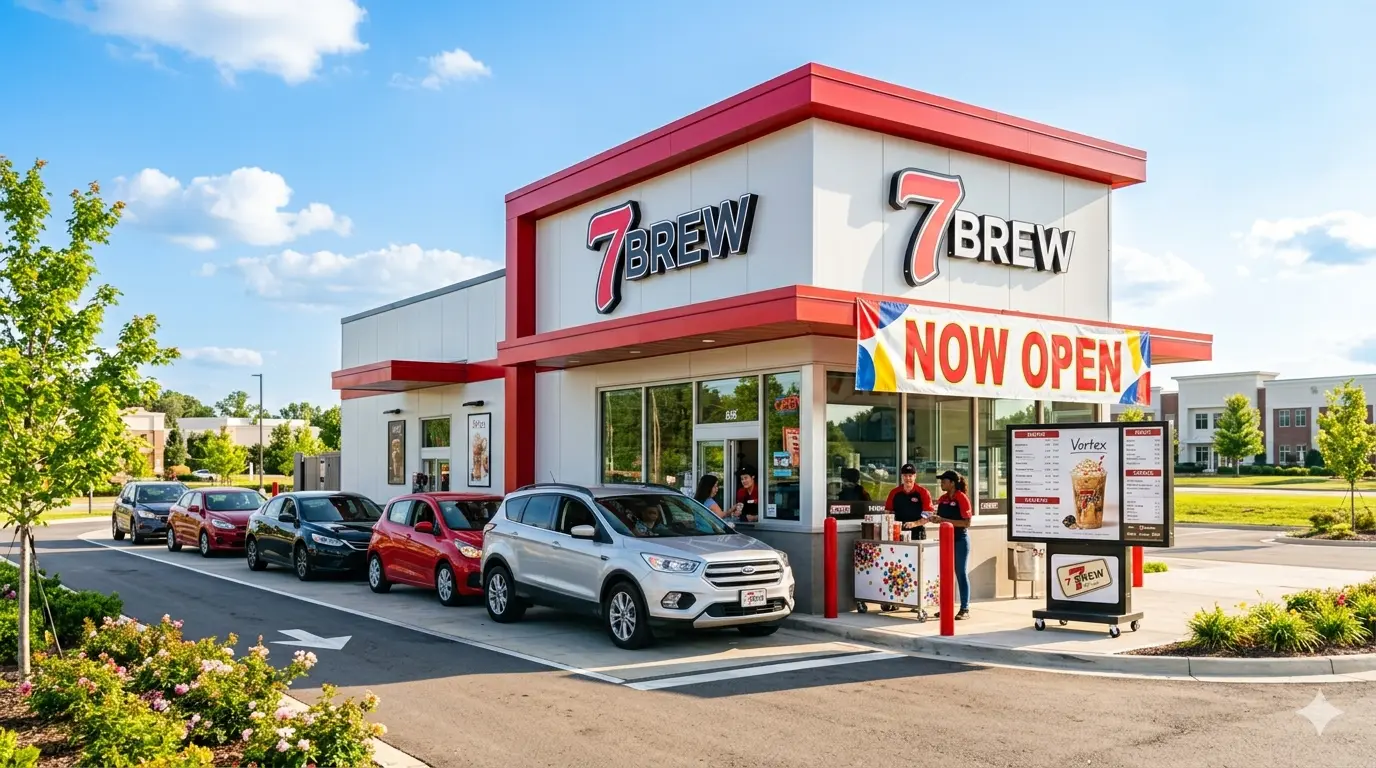
For context, 7 Brew operates compact, drive-thru-only locations — a format that is perfectly suited to modular construction methods. These builds are faster, more cost-efficient, and increasingly popular as brands look to scale without the overhead of traditional construction timelines.
What Changed
Previously, ModuAll’s work with 7 Brew was a business relationship largely behind the scenes. Now, ModuAll is actively and publicly leveraging that partnership in its marketing and sales outreach. This shift means 7 Brew’s brand equity is working double duty — attracting coffee lovers to the drive-thru window and attracting restaurant developers to ModuAll’s pitch meetings.
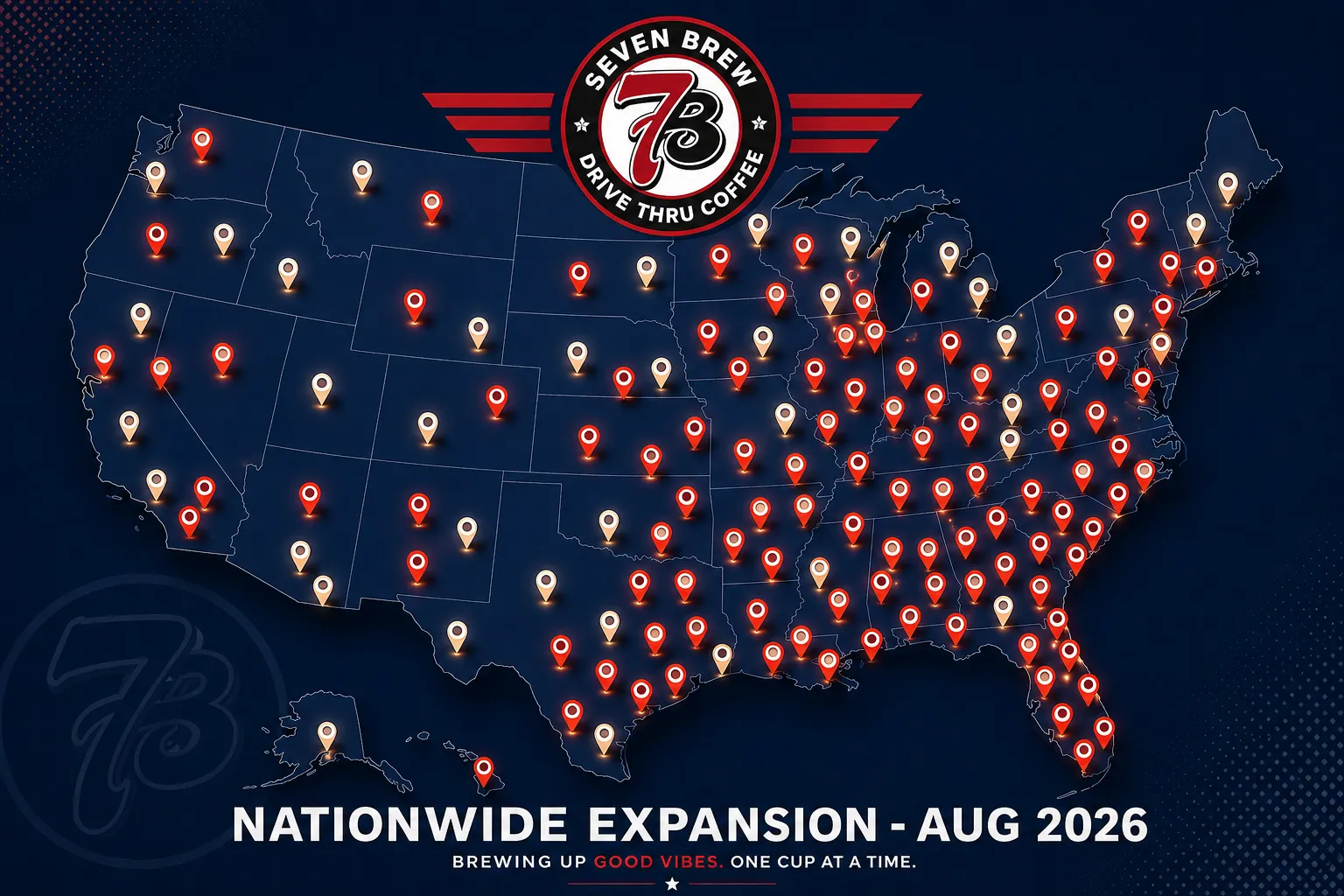
For 7 Brew fans curious about how new locations seem to appear so quickly in new markets, this is a big piece of the puzzle. Modular builds can dramatically reduce the time from site approval to grand opening, which explains part of 7 Brew’s aggressive expansion velocity across the United States.
Why It Matters
This development matters for several reasons. First, it confirms that 7 Brew’s operational model is being treated as an industry benchmark — not just in coffee, but in QSR infrastructure. Second, it suggests that modular construction could become a standard playbook for fast-growing drive-thru brands. Third, if ModuAll successfully attracts more QSR clients using 7 Brew as a reference, it could strengthen ModuAll’s capacity and resources, which may indirectly benefit 7 Brew’s own future builds.
The quick-serve coffee segment is one of the most competitive in food and beverage. Brands that can open new locations faster and at lower capital cost have a structural advantage. ModuAll’s modular approach appears to be a key weapon in 7 Brew’s expansion arsenal, and now that strategy is being exported to the broader QSR world.
Customer Impact
For 7 Brew customers, this news is largely positive. A stronger ModuAll means a more experienced and better-resourced construction partner for future 7 Brew locations. If you have been waiting for a 7 Brew to open near you, the continued refinement of modular build processes could mean that wait gets shorter. You can always check the 7 Brew FAQs for the latest information on new locations and what to expect when one opens in your area.
Beyond location speed, modular builds tend to maintain consistent design standards, which means the 7 Brew experience — the layout, the drive-thru flow, the energy — should remain recognizable no matter which location you visit.
Industry Context
The QSR modular construction trend is not unique to 7 Brew. Brands like Dutch Bros, Scooter’s Coffee, and other drive-thru-centric chains have explored modular and prefabricated building solutions to accelerate growth. What sets ModuAll’s move apart is the explicit, public use of a named brand partner — 7 Brew — as a credibility marker. That kind of transparency is relatively rare in B2B construction marketing and suggests real confidence in the quality of the 7 Brew builds they have delivered.
The broader QSR industry has been under pressure to open new units faster while managing inflation in construction costs. Modular solutions directly address both challenges, which is why ModuAll’s pitch is likely resonating with franchise developers and corporate real estate teams across the country.
Future Outlook
If ModuAll successfully converts new QSR clients on the strength of the 7 Brew relationship, it creates a positive feedback loop. A busier, more profitable ModuAll can invest in better processes, materials, and logistics — all of which benefit 7 Brew as an existing client. More broadly, the normalization of modular construction in the drive-thru coffee segment could accelerate the entire category’s growth, raising the competitive bar for all players.
For 7 Brew specifically, being the brand that other QSR companies look to as a construction model is a form of brand prestige that goes well beyond menu innovation. It reinforces 7 Brew’s reputation as a company that executes at a high level operationally. If you want to follow 7 Brew’s growth journey more closely, the 7 Brew Rewards Program is a great place to stay connected with the brand as it continues to expand.
Comparison Table
| Factor | Modular Build | Traditional Build | 7 Brew Fit |
|---|---|---|---|
| Build Time | Faster | Slower | Strong |
| Cost | Lower | Higher | Strong |
| Consistency | High | Variable | Strong |
| Scalability | Excellent | Moderate | Strong |
| Design Flex | Moderate | High | Adequate |
Pros and Cons
- ✓ 7 Brew’s expansion speed gets a credible explanation — modular builds are faster and cheaper than traditional construction
- ✓ ModuAll gains a powerful case study that validates its product in a high-visibility, high-growth brand context
- ✓ Other QSR brands adopting modular builds could normalize the approach, benefiting the entire drive-thru coffee segment
- ✓ Consistent modular design means a more reliable customer experience across all 7 Brew locations
- ✗ If ModuAll takes on too many new clients, capacity constraints could slow 7 Brew’s own pipeline of new locations
- ✗ Modular construction can limit architectural uniqueness, potentially making locations feel cookie-cutter in saturated markets
Our Take
What stands out here is that ModuAll is not just riding 7 Brew’s coattails — it is making a calculated bet that 7 Brew’s brand reputation is strong enough to open doors in corporate boardrooms far beyond the coffee industry. That is a meaningful statement about where 7 Brew sits in the QSR landscape right now. Most construction firms would lead with cost savings or timelines in their pitch. ModuAll is leading with a name. That tells you something about how seriously the development world is taking 7 Brew’s growth trajectory. The risk, of course, is that ModuAll’s attention gets divided as it chases new clients. 7 Brew’s leadership will want to ensure that its own build pipeline remains a priority even as ModuAll scales its broader QSR portfolio.
Frequently Asked Questions
What is ModuAll and what does it do for 7 Brew?
ModuAll is a modular construction company that builds quick-serve restaurant locations. It has been a construction partner for 7 Brew Coffee, helping the brand open new drive-thru locations faster and more cost-efficiently than traditional construction methods allow.
Why is ModuAll using 7 Brew to attract new clients?
ModuAll is leveraging 7 Brew’s strong brand recognition and rapid growth as a proof-of-concept to show other quick-serve restaurant brands what modular construction can achieve. 7 Brew is essentially a living portfolio piece for ModuAll’s capabilities.
How does modular construction help 7 Brew expand so quickly?
Modular builds are prefabricated off-site and assembled on location, which dramatically reduces construction timelines. This allows 7 Brew to go from site approval to grand opening much faster than brands using traditional construction methods.
Does the ModuAll partnership affect the quality of 7 Brew locations?
Modular construction actually tends to improve consistency across locations because components are built to the same specifications each time. This means customers can expect a similar layout and experience at every 7 Brew they visit.
Will ModuAll working with other QSR brands slow down 7 Brew’s expansion?
It is a legitimate concern. If ModuAll takes on significantly more clients, capacity could become stretched. However, the relationship between ModuAll and 7 Brew appears strong, and 7 Brew’s continued growth is likely central to ModuAll’s own business success.
What other coffee or QSR brands use modular construction?
Several drive-thru-focused brands including Dutch Bros and Scooter’s Coffee have explored modular and prefabricated building solutions. The approach is becoming more common across the quick-serve industry as brands prioritize speed and cost efficiency.
Where can I find out if a new 7 Brew is opening near me?
The best way to stay updated on new 7 Brew locations is to follow 7 Brew’s official social channels and check resources like the 7 Brew Nutrition Calculator page for the latest brand updates and announcements.
Is modular construction common in the coffee industry?
It is growing in popularity, especially for drive-thru-only concepts that do not require large dining rooms. The compact footprint of brands like 7 Brew makes them ideal candidates for modular building approaches.
Bottom Line
ModuAll’s decision to publicly bank on its 7 Brew partnership is a smart and telling move. It confirms that 7 Brew has become more than just a beloved regional coffee chain — it is now a benchmark brand that the construction and development industry points to as a model of efficient, scalable growth. For 7 Brew fans, this is good news on balance. A stronger ModuAll with a refined modular playbook means more 7 Brew locations opening faster in more markets. The story also highlights how much of 7 Brew’s success happens behind the scenes, in the logistics and construction decisions that make rapid expansion possible. Keep an eye on how ModuAll’s new client roster develops — it could tell us a lot about where the next wave of 7 Brew locations will appear. You can also explore the 7 Brew Secret Menu while you wait for your nearest location to open.
Key Takeaways
- ModuAll is actively using its 7 Brew partnership as a marketing tool to attract new quick-serve restaurant clients.
- Modular construction is a core reason why 7 Brew can open new locations faster than many competitors.
- 7 Brew’s brand is now strong enough to serve as a credibility marker in B2B construction industry pitches.
- Consistent modular design benefits customers by delivering a reliable experience across all 7 Brew locations.
- The main risk is capacity strain at ModuAll if it scales too quickly, which could potentially slow 7 Brew’s own build pipeline.